
See how tailored instruction unlocks faster learning and lasting confidence.
It works because it’s personal. One-on-one tutoring succeeds where classrooms often can’t, by focusing entirely on one student.[1] That singular attention allows for a learning experience molded to a specific pace, style, and set of challenges.
The result isn’t just better grades. It’s a transformed relationship with learning itself, built on confidence and understanding. If you’ve ever wondered why this approach is so effective, the reasons are both simple and profound. Keep reading to see how individual tutoring builds a foundation for real, lasting academic success.
Key Takeaways
- Instruction adapts in real-time to a student’s unique needs.
- A judgment-free space encourages questions and builds confidence.
- Immediate feedback corrects misunderstandings before they become habits.
The Classroom Conundrum
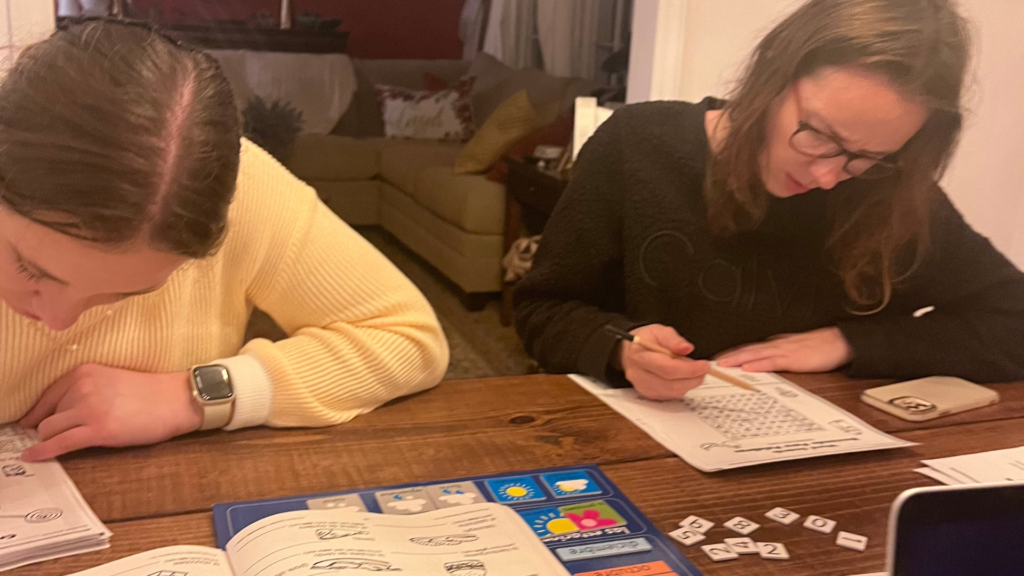
You can almost feel the split in the room. One teacher, thirty students, and the lesson lands in uneven ways. A few follow every word, some are quietly lost, and most hover in that uncertain middle.
The class moves on anyway, because it has to. That gap becomes even clearer when comparing apps versus private tutors, where human adjustment replaces rigid systems built for an “average” learner. That’s exactly where one-on-one tutoring changes the story.
| Aspect | Traditional Classroom | One-on-One Tutoring |
| Learning pace | Fixed to curriculum schedule[2] | Adjusted to the student’s speed |
| Teacher attention | Divided among many students | Fully focused on one learner |
| Question asking | Limited by time and peer pressure | Encouraged at any moment |
| Lesson depth | Broad coverage, limited flexibility | Deep focus on difficult concepts |
| Instruction style | One-size-fits-most | Personalized to learning style |
With a tutor, the clock stops ruling everything. The student’s pace takes over. Some ideas need to be revisited many times, others snap into place in minutes, and that’s allowed. A whole hour on one stubborn math problem? Fine.
Tutoring also lets learning go deeper, not wider.
- Learning pace is determined by the student, not the clock.
- Tutors can connect lessons to a student’s personal interests.
- The focus is on deep understanding, not just test preparation.
The Safety to Be Curious
You can almost see a student’s shoulders drop when they realize they’re not being judged. No sideways glances, no quiet laughing, just space to ask what’s really on their mind. That’s what a good tutor builds.
For shy or neurodivergent students, a classroom can feel like a spotlight. Questions stay inside, not from lack of interest, but from fear of standing out. In a one-on-one session, that pressure thins out. Saying “I don’t get it” becomes part of the work, not a failure.
That safety is one of the key benefits of personalized English instruction, especially for students who hesitate to speak up or learn differently from their peers. When there’s no pop quiz, no public mistakes, the body calms:
- less racing heart
- less stomach tension
- more focus on the problem itself
From there, rapport becomes the quiet engine. The tutor learns the student’s quirks and signals, knows when to slow down or cheer them on.
And slowly, that trust turns into engagement, persistence, and a real, steady confidence that walks with them back into class.
The Power of Instant Correction
You can almost see the light go on when a mistake gets caught right as it happens. In a classroom, feedback can lag days behind the work. By then, the error feels “normal.” In tutoring, that delay shrinks to zero.
The tutor watches each step, hears each thought, and steps in right away when something veers off. It’s more like a coach beside you, adjusting your form mid-swing, not after a whole round.
| Feedback Timing | Typical Classroom | One-on-One Tutoring |
| Error detection | After homework or tests | During the learning process |
| Correction speed | Delayed (days or weeks) | Immediate |
| Risk of habit formation | High | Low |
| Concept clarity | Partial or unclear | Clear and reinforced |
| Learning efficiency | Slower progress | Faster skill mastery |
That kind of instant loop changes how learning feels and works:
- errors are corrected before they harden into habits
- students see why something is wrong, not just that it is
- practice time stays aligned with the right method
This matters most in skill-based subjects like writing and languages, where online English tutoring allows mistakes to be corrected immediately before they turn into habits. With one-on-one support, gaps don’t sit and grow quietly. They get patched while they’re still small, and that makes future work less overwhelming.
Focus, Accountability, and Attention that Sticks
When it’s just one student and one tutor, the whole room feels different. There’s no whispering in the back, no shuffling desks, no pencil tapping that pulls attention away. For a lot of learners, especially those who struggle to stay on task, that quiet, steady setup is a relief. The tutor becomes a kind of anchor, gently pulling focus back when it drifts instead of punishing it.
That close attention brings a new type of accountability:
- the tutor tracks progress in real time
- strategies shift quickly when something isn’t working
- effort and small wins get noticed and named
This isn’t about pressure, it’s about support. The student starts to understand that someone is truly watching their growth, not just their grades. Over time, that outside structure starts to move inside. They begin to hold themselves to the same standard, building self-discipline and stronger study habits that stretch beyond any single session.
Learning How to Learn
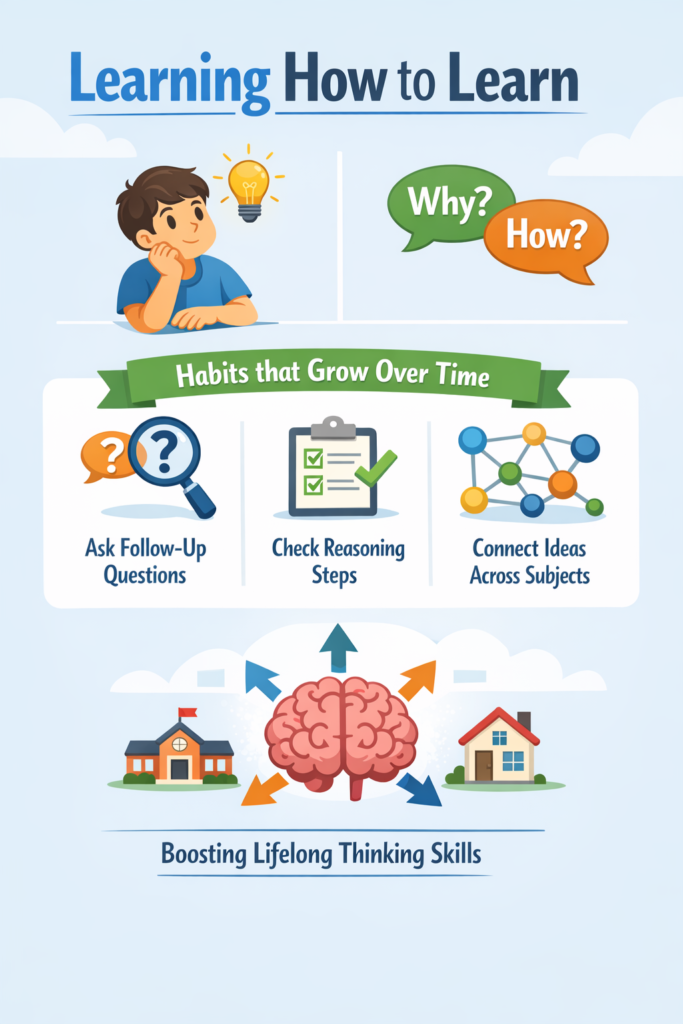
You can almost tell when a student stops chasing the “right answer” and starts chasing understanding. That shift doesn’t usually happen in a crowded classroom, it grows slowly in one-on-one talks where a tutor keeps asking, “Why?” and “How did you get there?” Over time, the student isn’t just memorizing formulas or dates, they’re actually mapping how ideas fit together.
That kind of instruction quietly trains a set of long-term habits:
- asking follow-up questions instead of guessing silently
- checking their own reasoning step by step
- transferring patterns from one subject into another
Soon, they start using these habits outside the session, solving a tricky science problem, reading news with more care, or catching flaws in their own writing. They’re not just “better at school.” They’re better at thinking. And that kind of thinking doesn’t clock out when the tutoring hour ends, it follows them into daily life.
Independence That Lasts
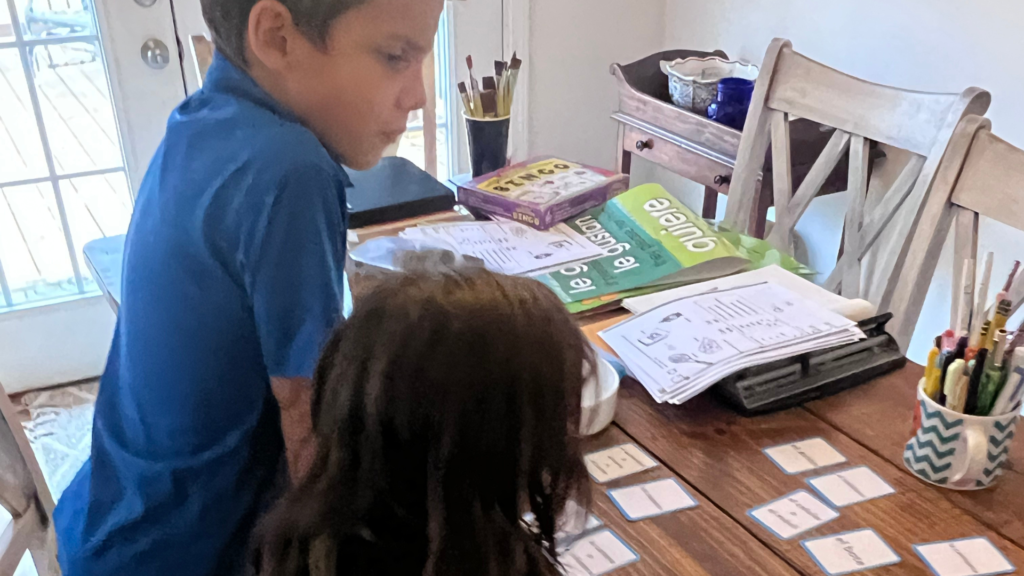
There’s a moment when a student stops looking at the tutor first and starts looking at themselves. At the start, the tutor often does the heavy lifting, breaking down tasks, setting timelines, suggesting study plans. But a thoughtful tutor treats all of that like training wheels, meant to come off.
Step by step, more responsibility moves to the student:
- planning out big projects and deadlines
- choosing which tasks to tackle first
- creating and adjusting their own study routines
This builds core executive function skills, which matter even more as classes get harder and teachers expect more independence. The attitude shift is just as important. Once a student has seen themselves struggle, adjust, and succeed, new challenges feel less like a threat and more like a puzzle.
Learning becomes something they can engage with, not just endure, and that mindset can quietly shape their future choices, in school and well beyond it.
FAQ
How does one-on-one tutoring support personalized learning better than classrooms?
One-on-one tutoring allows personalized learning through individualized instruction and student-centered teaching. Tutors create customized learning plans and use learning style adaptation to match each learner.
With focused attention and minimized distractions, students receive instant feedback, immediate corrections, and real-time guidance. This approach improves concept understanding, subject mastery, retention improvement, and academic performance over time.
Can private tutoring really improve grades, test scores, and confidence?
Private tutoring supports academic improvement by targeting learning gaps and reteaching foundational concepts. With targeted instruction and an adaptive learning pace, students often see grade enhancement and test score boost.
Confidence building and self-esteem growth follow because learners can ask questions freely without peer judgment. Reduced anxiety and a safe learning environment help students stay engaged and motivated.
Why is 1:1 tutoring helpful for shy learners and neurodivergent students?
1:1 tutoring offers shy learner aid and neurodivergent support through a calm, safe learning environment. There is no peer judgment, which encourages self-expression freedom and question asking freedom.
Tutors adjust pacing, communication, and tasks for concentration enhancement and stress reduction. This classroom alternative helps students build healthy communication, focus, and a positive learning attitude.
How does individual tutoring build study habits and executive function skills?
Individual tutoring supports tutor accountability and strong study habit development. Tutors teach time management skills, organization skills, and prioritization techniques through executive function support.
With goal setting and task focus, students learn homework management and independent learning. These habits improve academic success, help with higher grade transition, and support long-term overall success beyond one subject.
Is one-on-one tutoring effective for online tutoring and in-person sessions?
One-on-one tutoring works in online tutoring and in-person sessions because focused attention remains the same. Flexible scheduling supports remedial support, advanced enrichment, and summer slide prevention.
High dosage tutoring and targeted instruction help close learning gaps, improve grade-level proficiency, and support peer catch-up. Research such as Bloom’s 2 sigma shows deeper interest and faster learning progress.
Your Path to Academic Success
One-on-one tutoring isn’t a magic bullet, but it’s close. It addresses the core issue of impersonal education by putting the student first. The personalized learning, the safe environment, the immediate feedback, it all adds up to more than just improved grades. It builds the confidence and skills that lead to overall success.
If you’re considering this path, look for a tutor who prioritizes connection and adaptability. The right match can make all the difference, turning frustration into capability and anxiety into self-assurance. It’s an investment in understanding, and that’s an investment that always pays off. Find a tutor who fits your learning style. Start with Ivy Language International.
References
- https://en.wikipedia.org/wiki/Tutoring
- https://en.wikipedia.org/wiki/Traditional_education
Related Articles
- https://ivylanguagesinternational.com/online-english-tutoring-benefits/
- https://ivylanguagesinternational.com/benefits-of-personalized-english-instruction
- https://ivylanguagesinternational.com/comparing-apps-versus-private-tutors