
Tips
Finding conversation partners becomes easier when we know what we want to improve and how often we can practise. I learned that speaking English regularly takes effort, especially when starting a conversation feels awkward or mistakes interrupt the flow. Sometimes, finding someone willing to practice is easier than building a routine that lasts.
At Ivy Languages International, we understand that progress comes from consistent effort, patience, and mutual respect. A good partner does not need to be perfect, but both people should feel comfortable learning together. Keep reading to find a suitable partner and build a speaking routine that works for you.
Find Your Conversation Partner: 3 Things That Matter Most
Finding the right conversation partner takes more than making contact; shared goals, fair participation, and regular practice help turn a first meeting into a lasting learning routine.
- Choose someone who fits your goals. Look for a partner with compatible interests, a suitable language level, and a schedule that works for both of you.
- Agree on expectations early. Discuss speaking time, corrections, meeting frequency, and conversation topics before committing to regular sessions.
- Focus on consistency, not perfection. Start with a short trial conversation, review what works, and adjust the arrangement as your speaking needs change.
Where Can We Find Conversation Partners Online and Offline?
We can meet potential conversation partners through language exchange platforms, local clubs, educational programs, and communities built around shared interests. The best place to start depends on our preferred communication style, available time, and comfort with meeting strangers.
Online options can make scheduling easier, while local groups offer opportunities to practice face to face.
Which online communities should we try?
Platforms such as Tandem and HelloTalk connect language learners with potential exchange partners. ConversationExchange is another option. Before joining, check which features are available, including text messaging, voice calls, video chats, or in-person exchanges.
Learners exploring where to practice English conversation online can also consider online discussion groups and communities built around shared interests. We can also join online groups focused on books, cooking, travel, or other hobbies. Shared interests give us something meaningful to discuss beyond introductions.
Where can we meet people in person?
Language cafés, community classes, university programs, and local conversation clubs can help us meet people with similar goals. We can also ask teachers or friends whether they know someone interested in practicing another language.
The University of Houston’s conversation-partner program provides an example of organized language practice. Try more than one suitable community if the first does not fit your needs. A little patience can help us find someone whose interests, communication style, and availability match our own.
How Do We Choose the Right Conversation Partner?

The right partner respects our learning goals, communicates clearly, and can make time for regular practice. We do not have to be at the same language level, but both people should understand what they want from the exchange. A short introductory conversation can help us check compatibility before committing to weekly meetings.
What should we check before arranging a call?
Rather than treating the first chat like a formal interview, bring up a few practical questions naturally. Explain what you hope to improve and ask what the other person wants to practice. Pay attention to how they respond and whether they show interest in your goals.
Use this checklist when deciding whether to continue:
- Goals: Do we both want regular speaking practice?
- Language level: Can we understand each other well enough to maintain a conversation?
- Availability: Can we agree on a realistic schedule?
- Interests: Do we have topics we both enjoy discussing?
- Fairness: Will both people receive enough time to practice?
These details matter more than a large number of shared interests. A compatible partner does not need to be perfect. We mainly need someone who listens, participates, and treats the arrangement as a shared commitment.
Why Is Finding a Partner Easier Than Keeping One?
Credits: Learn English with Bob the Canadian
Making contact is often easier than maintaining a regular language exchange. At first, both people may be enthusiastic about practicing. Over time, work, study, family responsibilities, and time differences can make meetings harder to arrange. A partnership may also lose its balance if one person does most of the talking or expects the other to provide free lessons.
How can we avoid wasting time?
We can reduce these problems by setting clear expectations and paying attention to whether both people follow through. One missed meeting does not necessarily mean the partnership will fail, but repeated problems deserve a conversation.
Common warning signs include:
- Frequent cancellations: One person regularly misses meetings without suggesting another time.
- Unequal effort: One partner chooses every topic, asks every question, or does most of the speaking.
- Different expectations: One person wants casual conversation while the other expects structured teaching.
- Scheduling difficulties: Finding a shared time becomes stressful or unrealistic.
Treat the first meeting as a trial and agree on the next session before ending the call. If the arrangement repeatedly fails to meet both people’s needs, it is reasonable to look for another partner. Informal exchanges are useful for practice, but learners who need detailed instruction may benefit from structured lessons as well.
How Do We Start a Conversation Without Feeling Awkward?
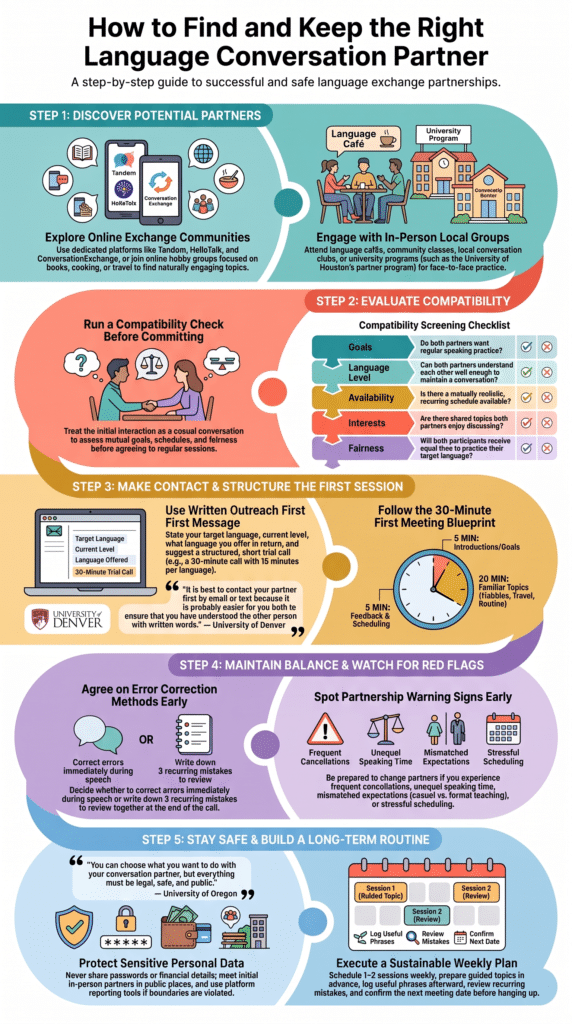
The first message does not need to be clever or lengthy. It should explain what we are learning, what kind of practice we want, and what we can offer in return. Giving a potential partner a clear idea of the arrangement makes it easier for them to decide whether it suits them.
How should we write our first message and follow up?
Mention your target language, current level, preferred meeting format, and one or two interests. Suggesting a short introductory call also gives both people a clear starting point.
Here is a message we can adapt:
Hi! I’m learning English and looking for a regular conversation partner. I can help you practice Indonesian in return. Would you be interested in a 30-minute introductory call, with 15 minutes for each language? I enjoy talking about food, travel, and hobbies. Let me know if that sounds good to you!
This message works because it explains the exchange, sets a time limit, and gives the other person an easy way to respond. We can adjust the details to fit our goals.
If someone does not reply, we can send one polite follow-up when appropriate, then move on. They may be busy, inactive, or looking for a different arrangement. Contacting a few suitable people is more practical than waiting indefinitely for one response.
How Should We Structure Our First Conversation?
A simple plan can make the first meeting less stressful and help us decide whether the partnership is a good fit. We do not need to prepare a full lesson. A short introduction, a few familiar topics, and time to review the conversation are enough to get started. The format should help both people speak without making the meeting feel like an exam.
As highlighted by University of Denver
“It is best to contact your partner first by email or text because it is probably easier for you both to ensure that you have understood the other person with written words.” – University of Denver
What is a useful 30-minute format?
We can spend the first five minutes introducing ourselves and discussing our goals. The next 20 minutes can focus on familiar topics, such as food, hobbies, daily routines, or travel. During the final five minutes, we can review useful phrases, mention any difficulties, and decide whether to meet again.
The division does not have to be rigid. Beginners may need extra time to understand questions, while more advanced learners may prefer longer discussions about work, culture, or personal interests. We can adjust the format after the first meeting based on what felt comfortable and useful.
It also helps to agree on how much time each person will spend speaking their target language. Equal practice might mean 15 minutes per language, alternating which language comes first, or adjusting the split when one person has a specific need.
Regular English conversation practice online can complement these exchanges by giving learners additional opportunities to speak and build confidence.
How Do We Share Speaking Time and Correct Mistakes?
A useful language exchange gives both people room to speak and a chance to learn from mistakes. Equal participation does not always require an exact 50/50 split in every meeting. One person may need more time to practice a difficult skill, but the arrangement should remain fair over time.
Which speaking format should we use?
We can divide each meeting equally when both people want the same amount of practice. Alternating sessions can work when one language needs more attention, while starting with the less confident speaker’s target language may help them use their time before energy fades. We should review the arrangement if either person feels the exchange has become unbalanced.
How should we handle corrections?
Before correcting each other, discuss what kind of feedback feels helpful. Some learners prefer immediate corrections when a mistake changes the meaning. Others speak more comfortably when they can finish their thoughts before reviewing errors.
We can agree to correct only unclear phrases during the conversation and discuss repeated mistakes at the end. Another option is to write down useful expressions and review them after the call.
For example, we might ask our partner to note three recurring mistakes and explain them once the discussion finishes. This approach gives us specific feedback without interrupting every sentence. After a few sessions, ask whether the method is helping. If corrections make the conversation difficult or do not address our needs, adjust the approach together.
How Do We Keep Conversations Useful and Safe?
Conversations can become repetitive when we return to the same introductory questions every week. Shared activities help us discuss something new, explain our opinions, and use familiar words in different situations.
At the same time, a good exchange should respect personal boundaries. We should feel comfortable participating without being pressured to share private information or continue contact.
Which activities can we try?
Discussing a short article, describing a photograph, comparing favorite foods, or explaining a hobby can give both people a clear starting point. We can also talk about family traditions, daily tasks, or opinions about familiar subjects.
Before each meeting, prepare a few questions that encourage more than a yes-or-no answer. Asking, “What did you enjoy about that experience?” usually gives a partner more room to explain their thoughts.
How can we stay safe?
Online and in-person exchanges require sensible precautions. Avoid sharing passwords, financial details, or other sensitive information with someone you have just met. For a first in-person meeting, choose a public place and arrange your own transport. Use a platform’s blocking or reporting tools if someone behaves inappropriately.
As noted by University of Oregon
“You can choose what you want to do with your conversation partner, but everything must be legal, safe, and public.” – University of Oregon
We do not owe a stranger personal details or continued contact. If a partner repeatedly ignores our boundaries, end the exchange and look for another option. Trust develops over time, and learning a language should never require us to compromise our safety or comfort.
How Can We Build a Speaking Routine That Lasts?

Regular practice gives us more chances to use familiar words, ask questions, and express our thoughts. We do not need hours of conversation every day. A manageable routine is easier to maintain when work, school, and family responsibilities compete for our time. It also helps us notice gradual improvements that may be difficult to recognize during a single conversation.
What should our weekly plan include?
Start with a schedule that fits your current responsibilities, then adjust it as you learn what works. A simple routine can provide enough structure without making language practice feel like another demanding task.
- Schedule one or two sessions each week. Choose times that both partners can realistically maintain.
- Prepare a topic before each meeting. Select an article, hobby, daily experience, or question to guide the conversation.
- Record useful phrases afterward. Keep a short list of expressions you want to use again.
- Review recurring mistakes. Choose one or two areas to practice rather than trying to correct everything at once.
- Confirm the next meeting. Agree on a date before ending the current session.
After each conversation, note one thing that went well and one thing you want to improve. You might notice that you answer questions more quickly or need fewer pauses to explain an idea. If your partner repeatedly misses meetings, consider joining another group or finding a new exchange partner.
At Ivy Languages International, we recognize that progress takes patience and consistent effort. Combining regular conversations with practical strategies for improving conversational English skills online can help us identify weaknesses, practice useful expressions, and adjust our routines as our needs change.
FAQ
How can I find a language partner if I am a complete beginner?
Start by finding a language partner for beginners who is patient and willing to speak slowly. Choose simple topics such as hobbies, food, and daily routines. A good language practice partner should give you time to think, ask questions, and make mistakes without feeling embarrassed. Before your first conversation, agree on a few clear goals, such as learning new words or practising everyday questions.
Is it better to practice with a native speaker or another learner?
Both options can help, depending on your goals. A native speaker conversation partner can help you learn natural expressions and understand everyday speech. Another learner may better understand the challenges you face when speaking. Choose an English conversation partner who listens carefully, shares speaking time fairly, and gives useful feedback. Regular practice with a supportive partner can help you improve your speaking skills.
How can I tell if a language exchange partner is reliable?
A reliable language exchange partner communicates clearly, attends planned sessions, and takes an active part in conversations. Before you begin, discuss your goals, preferred schedule, and expectations for correcting mistakes. Pay attention to whether the person keeps appointments and gives you enough time to speak. If they often cancel meetings or dominate conversations, look for a partner whose schedule and commitment better match yours.
What should I do if my language partner keeps switching to English?
Explain that you need more practice speaking your target language, and suggest setting aside specific times for each language. A balanced language exchange gives both people a fair chance to practise. You can agree to use simple words, repeat unfamiliar phrases, and write down difficult expressions. If your partner continues to switch languages despite your agreement, discuss the problem openly or find someone who better supports your learning goals.
How can I keep conversations going when we have different interests?
Start with familiar subjects such as travel, food, work, entertainment, or daily life. Prepare a few language exchange conversation topics before each meeting, and ask open-ended questions that encourage detailed answers. For example, instead of asking whether someone enjoys travelling, ask about their most memorable trip. You can also take turns choosing topics. Different interests do not have to stop a conversation when both people listen carefully and show genuine curiosity.
Find the Right Language Partner
Finding a language partner can be frustrating when plans fall through or conversations don’t help you improve. It takes time. The right partner should respect your schedule and give you room to practice without feeling judged. If your current arrangement isn’t working, we can always adjust our approach and keep learning at our own pace.
We’re here to help you take the next step with confidence. Ready to practice? Explore Ivy Language International and start your language-learning journey today.
References
- “Guidelines for American Students.” University of Denver. Accessed October 14, 2026.
- “Conversation Partners.” University of Oregon. Accessed October 14, 2026.
Related Articles
- https://ivylanguagesinternational.com/where-to-practice-english-conversation-online/
- https://ivylanguagesinternational.com/english-conversation-practice-online/
- https://ivylanguagesinternational.com/improving-conversational-english-skills-online/

Comment(01)