
Tips
Best tips for English beginners start with small, steady habits each day. I learned this the slow way, beginning with a few words after long workdays when focus was limited. At first, I tried to study for hours on weekends, but most of it faded quickly. Over time, I shifted to short daily practice, repeating simple phrases and using them in real situations.
At Ivy League International, we follow the same approach because we’ve seen it work across many learners. Progress comes quietly, through routine and patience, not pressure. If you’re looking for a clear and steady way forward, keep reading.
Quick Wins for English Beginners
These are the core habits that shape steady progress and build real confidence over time.
- Daily practice for 15 to 30 minutes builds stronger results than long, irregular study sessions
- Learning basic vocabulary and simple grammar first creates a solid foundation for communication
- Speaking and listening early improves confidence and fluency faster than passive study
What are the Most Effective Daily Habits for Learning English?
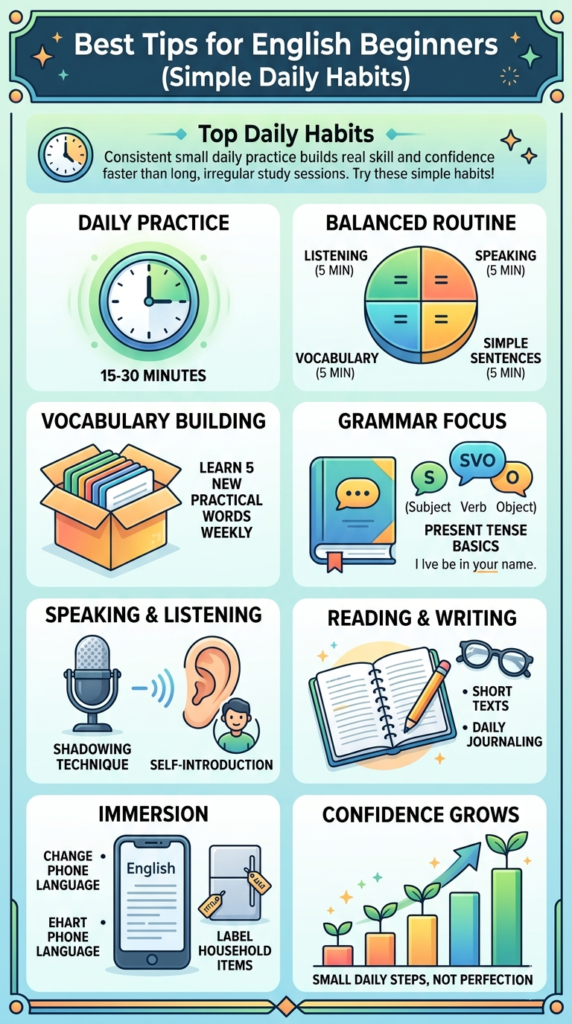
The most effective habit is a short daily practice. I used to try studying for hours on Saturday, but I’d forget everything by Monday. At Ivy League International, we start all our beginners with this routine. This is the exact structure we use with beginners:
| Time (Minutes) | Activity | Example | Goal |
| 5 minutes | Listening | Short dialogue or slow audio | Understand basic sounds |
| 5 minutes | Speaking (repeat aloud) | Repeat simple phrases | Build pronunciation |
| 5 minutes | Vocabulary practice | Learn 5 new words | Expand daily vocabulary |
| 5 minutes | Simple sentence practice | “I eat rice”, “I go to work” | Build basic sentence skills |
Research from groups like Cambridge English backs it up, consistent exposure really does stick in your memory. This kind of structured routine also reflects how online tutoring improves fluency, where short, guided sessions help learners build habits that last.
Here’s what that daily habit looks for our students:
- Practice every day, even if it’s brief.
- Combine listening and speaking in the same session.
- Use simple audio, like beginner podcasts or slow news reports.
- Repeat phrases out loud to get used to the sound.
The learners who stick with this don’t get burned out. They just get better, quietly and steadily. It’s the small, consistent actions that build over time, not the grand plans.
How Should Beginners Build Essential English Vocabulary Quickly?

Start with the words you’ll use today, not a list of hundreds. I wasted time memorizing obscure vocabulary I never saw again. When I focused on practical usage, similar to the approach outlined in English for beginners (starter strategies), I could actually talk to people and remember what I learned.
Repetition is the key, but it has to be active. Write the word, say it, use it in a sentence about your own life. “I drink coffee.” “I go to the market.” This connects it to your world. A passive flashcard won’t do that.
This is the method we guide our students through:
- Pick 5-10 practical, high-frequency words each week.
- Use a simple app or physical flashcards for review.
- Write a basic sentence using each new word.
- Keep a small notebook just for these words and sentences.
We see people gain real confidence when they can build a simple sentence from their own vocabulary, not from a textbook example.
What Basic Grammar Rules Should English Beginners Focus on First?
Don’t worry about every rule. Just learn how to build a simple sentence. I got lost trying to understand perfect tenses before I could even say “I like apples.” The core is Subject-Verb-Object: “She reads books.” At Ivy League International, we follow the British Council’s advice to master this structure first, using the present tense.
Insights from Gymglish indicate:
“A complete sentence must always include a subject and a verb… The subject and the verb must agree in number (singular or plural). If the subject is singular, then the verb must be singular. If the subject is plural, then the verb must be plural.” – Gymglish Blog
Use the grammar immediately. Write three sentences about your day using that structure. Say them out loud. This practical use teaches you more than a grammar chart ever will. Complexity can come later, after this foundation feels solid.
For a beginner, these are the only grammar pieces you need to start:
- Construct sentences in the order: Subject, Verb, Object.
- Stick to the present simple tense (I work, you eat).
- Add the basic articles “a” and “the” where needed.
- Avoid passive voice, conditionals, or other advanced rules for now.
People who follow this path start speaking sooner. They communicate, even with mistakes, and that’s what builds real skill.
Why are Listening and Speaking The Fastest Ways to Improve English?
I improved my reading, but my speaking stayed frozen until I started talking. Even just describing my room to myself helped. At Ivy League International, we have beginners speak from day one.
Research from EF English Live shows:
“Essentially, speaking a language helps to move your knowledge of grammar, vocabulary, and pronunciation from the back of your mind to the front, or from your ‘slow memory’ to your ‘quick memory.’ … The more you play, the more you build up your ‘muscle memory’ and your fingers automatically know where to go without you having to think about it, this is what begins to happen with your language skills when you start to speak the language out loud.” – EF English Live
Listen to clear, slow English first. It helps you catch the rhythm and sounds without getting overwhelmed. Then repeat it, shadowing the speaker.
These techniques make the fastest difference:
- Listen to beginner-focused audio with clear narration.
- Practice “shadowing” by repeating sentences right after you hear them.
- Do a daily self-introduction, even if it’s just to a mirror.
- Try short, simple language exchange conversations online.
We’ve watched learners who do this shed their fear quickly. They get used to the act of speaking, which is the whole point.
How can Beginners Improve Reading and Writing Skills Effectively?
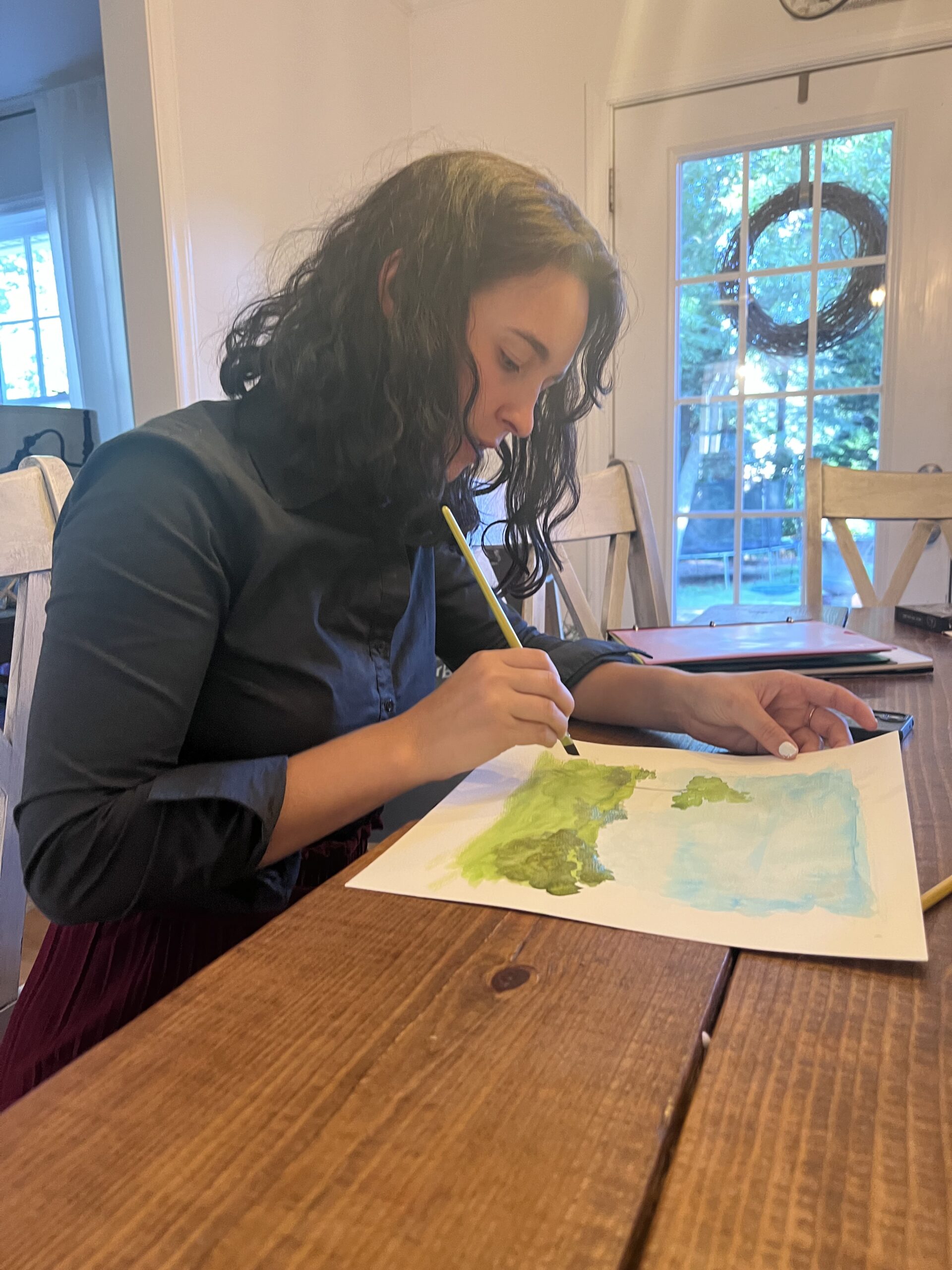
The first time I tried reading a full novel in English. I thought pushing myself harder would help, but I ended up feeling stuck and discouraged. It was too much, too soon. Things only started to change when I slowed down and chose simpler texts I could almost understand.
I began with short articles, simple stories, even menus. It felt small, but it worked. Over time, the words started to repeat, and I didn’t need to translate everything. That gave me a bit of confidence to keep going.
Writing followed the same pattern. I didn’t aim for perfect sentences. I just wrote a few lines each day about what I did or noticed. Some days it felt repetitive, but the habit mattered more than the result.
This is the routine that helped me stay consistent:
- Read short, manageable texts every day
- Underline new words and check them right away
- Write 3–5 simple sentences in a daily journal
- Review and fix one or two small mistakes
Progress comes quietly, but it does come. If you stay with it, you begin to see your own growth on the page.
What Immersion Techniques Help Beginners Learn English Faster?
When I first tried to learn English, I did not have access to classes every day. Most of my progress came from small changes at home. I remember switching my phone to English and feeling lost for a few days. Simple things took longer, but after a week, it started to feel normal.
What helped me most was turning English into part of my daily life, not something separate. I stopped treating it like a subject and started living with it, little by little.
Here are the steps that worked for me:
- Change your phone, laptop, or apps into English
- Put simple labels on things around your home
- Watch videos about topics you already enjoy
- Listen to music or podcasts while doing routine tasks
At first, it may feel uncomfortable. That is part of the process. Over time, your brain adjusts, and English becomes familiar instead of distant.
I still follow this approach today. It is not fast or perfect, but it is steady. If you stay with it, the language slowly becomes part of your everyday thinking, and that is where real progress begins.
What do Real Learners Say Works Best for English Beginners?
I am trying to build the “perfect” sentence before saying anything out loud. Most days, I said nothing. That silence slowed me down more than any mistake ever could. Over time, I started paying attention to what real learners were actually doing, not what I thought I should do.
In small online groups and forums, the same pattern kept showing up. People who improved were not the ones studying the most rules. They were the ones using the language, even when it felt uncomfortable.
From what I’ve seen and tried myself, a few habits made a real difference:
- Start speaking with short, simple sentences, even if they feel too basic
- Avoid complex grammar early on, it only adds pressure
- Practice something active every day, like writing or speaking out loud
- Focus on being understood, not being perfect
Once I accepted that mistakes were part of the process, things changed. Progress felt slower at first, but more steady. If you stay with it, even in small ways, the language begins to feel usable, not just something you study.
How can AI Tools and Modern Methods Accelerate English Learning?
I remember studying English, repeating simple sentences with no one to correct me. It felt slow, and sometimes I was not even sure if I was improving. When I first tried basic language apps, they helped me stay consistent, even at odd hours. Now, with newer AI tools, that same idea has grown into something more useful and responsive.
From what I have seen over time, these tools work best as support, not a replacement for real effort. They give structure when your schedule is busy, especially if you are figuring out how to start learning English online in a way that fits into your daily routine.
In my own routine, I started using simple methods like these:
- Practice short vocabulary or grammar prompts each day
- Follow a clear digital plan to cover basic topics step by step
- Use conversation simulations to get comfortable forming sentences
- Write short responses and review quick corrections
This kind of steady practice builds awareness. You begin to see patterns, catch errors faster, and feel more prepared when speaking with real people. Over time, that quiet progress adds up.
Why Is Learning English Through Hobbies More Effective than Traditional Study?
Credits: Speak English With Class
I remember sitting late at night, tired of grammar drills, and opening a simple gardening video instead. I wasn’t trying to study. I just wanted to relax. But somehow, I stayed longer, listened closer, and picked up words without forcing it.
That was when I noticed something important. When I care about the topic, I don’t drift away. I pay attention. Words like “soil,” “roots,” and “watering” started to make sense because I could see them in action. They were not just words anymore. They had meaning tied to something real.
Over time, I leaned into this approach. I stopped pushing myself through lessons that felt distant and started building around what I already enjoyed.
Here’s what helped me stay consistent:
- I watch videos or read about topics I already like
- I note useful words that come up often
- I stay curious instead of trying to memorize everything
- I let go of rigid study routines that feel heavy
This way feels slower at times, but it stays with me. If you’re willing to follow your interests, you may find learning becomes something you return to, not avoid.
Why Is There Limited Expert Forum Advice for Beginners?
Instead, I found long discussions about grammar theory that I could not use the next day. It felt distant from what I actually needed, which was just to speak, order food, and get through basic conversations.
Over time, I realized the gap was not accidental. Many experts speak to other experts, not to beginners trying to take their first steps. That disconnect can slow people down more than help them.
From my experience, a few patterns became clear as I kept learning and later helped others start their journey in a more practical way:
- Expert spaces often focus on theory instead of daily use
- Beginners need clear, small steps they can apply right away
- Real-life practice builds confidence faster than abstract study
This shift is why practical platforms matter more now. People want language they can live with, not just analyze. We try to stay grounded in that, keeping things simple, usable, and honest, so progress feels possible for anyone starting out.
FAQ
How can I start daily English practice without feeling overwhelmed?
Start small and keep your routine simple. Many beginner English tips recommend just 15 minutes of daily English practice. Focus on everyday English words and common English phrases you can use right away.
You can use habit stacking language by practicing during routine tasks like commuting. Follow a clear self-study English plan and track your progress in a journal. Consistent practice matters more than long, irregular study sessions over time.
What is the fastest way to learn English fast at beginner level?
If you want to learn English fast, focus on using the language, not just studying rules. Build basic English vocabulary and simple English grammar first. Combine English speaking practice with English listening exercises every day.
Try shadow speaking English with short audio clips. Practice beginner English sentences regularly. This method helps you gain confidence faster than passive study or memorizing long word lists.
How should I improve English pronunciation as a beginner?
Use a simple English pronunciation guide and focus on sounds first. Practice phonics for English, word stress English, and intonation patterns. Repeat short phrases aloud and record your voice to check your progress.
Shadow speaking English with slow audio can improve accuracy. Pay attention to common pronunciation pitfalls early. Daily practice that combines listening and speaking will improve your clarity over time.
What are the best ways to build basic English vocabulary quickly?
Focus on basic English vocabulary that you use in daily life. Learn everyday English words such as food vocabulary English and time and dates English. Use English flashcards with spaced repetition English and the active recall method.
Write beginner English sentences using new words. Picture dictionaries and bilingual resources can help you connect meaning quickly and remember words more effectively.
How can I practice English speaking if I have no partner?
Start with simple English conversation starters and speak out loud every day. Describe pictures in English, narrate your day, or retell short video clips. Use role play scenarios such as shopping English phrases or restaurant English dialogue.
Record your voice and review it to find areas to improve. You can try language exchange partners later, but practicing alone first helps build confidence.
Build Confidence That Actually Sticks
Each small habit added up, even when it felt repetitive. You try to speak and the words don’t come out right, so you pause and repeat the same mistakes. It’s frustrating. That’s normal.
We keep things simple at Ivy Language International with daily practice that helps you build real confidence over time. You don’t need perfect English, just steady use that works. Ready to keep going with us? Start here
References
- https://blog.gymglish.com/2023/07/17/15-basic-english-grammar-rules-a-quick-guide-with-examples
- https://englishlive.ef.com/en/blog/study-tips/five-reasons-speaking-english-great-way-learn/
Related Articles
- https://ivylanguagesinternational.com/how-online-tutoring-improves-fluency
- https://ivylanguagesinternational.com/english-for-beginners-starter-strategies/
- https://ivylanguagesinternational.com/how-to-start-learning-english-online/