
Tips
Simple English conversation topics helped me become more comfortable speaking in everyday situations. I still remember understanding grammar exercises but freezing during simple interactions at cafés, stores, and workplaces. For a long time, I thought better grammar would automatically improve my speaking, but real progress came from short daily conversations instead.
I started practicing small talk, asking simple questions, and responding naturally without overthinking every sentence. At Ivy League International, we focus on practical communication that feels useful in daily life, not perfect textbook answers. Keep reading to explore conversation topics that can help speaking feel more natural over time.
Everyday Speaking Quick Wins
These simple conversation habits help beginners speak more naturally, build confidence slowly, and handle daily English situations with less hesitation.
- Simple English conversation topics help learners practise real situations like shopping, work, weather, and family discussions.
- Daily speaking practice with short conversations builds confidence faster than grammar memorization alone.
- Real-life conversation patterns help learners move from CEFR A1–B1 speaking levels more naturally.
Quick Conversation Wins

When I first started helping students with spoken English, I noticed many learners shared the same problem. They understood grammar exercises but froze during simple conversations. A student could finish written homework easily, yet still struggle to answer “How was your weekend?” in real life. That gap became clear after years of classroom teaching.
As highlighted by The Muse
“Keeping a conversation going is all about finding common ground. Instead of asking ‘How are you?’, which often leads to a one-word answer, try ‘What’s been the best part of your day so far?’ This invites a story rather than a status update.” – The Muse
Simple conversation topics helped most learners improve faster because the situations felt familiar. The challenge is learning how to say those ideas comfortably in English. Repeating these topics every day slowly reduces hesitation.
These topics appear often in daily life:
- Greetings and introductions
- Family conversations
- Daily routines
- Food and drink
- Weather talk
- Shopping conversations
- Work and school topics
- Weekend plans
- Travel situations
- Phone conversations
Students usually become more relaxed after repeating these topics many times. The goal is not perfect grammar. The goal is becoming comfortable enough to respond naturally during ordinary conversations.
What are the best simple English conversation topics for beginners?
Credits: Max & Mia Podcast
In my experience, beginner learners improve faster when conversations stay close to daily life. Topics feel less stressful when learners already understand the situation. I remember working with adults who felt nervous speaking English at work, but they became more comfortable after practicing small daily conversations repeatedly.
Topics connected to ordinary routines usually work best for beginners. Learners hear these conversations often at stores, restaurants, schools, and workplaces. Many students using practical English for beginners’ starter strategies become more comfortable because the situations feel familiar and easier to repeat daily.
| Topic | Example Question | Simple Reply |
| Introductions | “Where are you from?” | “I’m from Indonesia.” |
| Family | “Do you have siblings?” | “Yes, one brother.” |
| Food | “What food do you like?” | “I like fried rice.” |
| Weather | “Is it hot today?” | “Yes, very hot.” |
| Daily Routine | “What time do you wake up?” | “Around 6 a.m.” |
These topics help because they use simple vocabulary and short answers. Learners also hear similar questions repeatedly in real life. After enough practice, responses begin to feel automatic instead of forced. Confidence grows slowly through familiar conversations repeated many times.
Why do generic conversation questions often fail?
Over the years, I noticed many students struggled with conversation books that sounded too formal. Questions like “Tell me about yourself” often made learners nervous. The question is simple, but it feels broad and difficult to answer naturally. Many learners pause because they do not know where to begin.
Real conversations usually happen because of something around us. Someone comments on the weather, asks about lunch, or talks about work schedules. Those moments feel easier because both people already share the same situation. Conversations become more relaxed and less like an interview.
These questions often stop conversations quickly:
- “What are your hobbies?”
- “Tell me about yourself.”
- “What music do you like?”
Situational questions usually work better:
- “Did you eat here before?”
- “Is traffic busy today?”
- “What are you doing this weekend?”
- “How was work today?”
I learned that learners respond faster when the topic feels connected to real life. Natural conversations move from one subject to another without planning. Practicing that flexibility helps learners feel calmer during real interactions.
Which real-life situations help you speak faster?
One thing became clear after years of teaching speaking classes. Learners improve faster when practice matches situations they truly need. A student preparing for travel learns differently from someone preparing for office conversations. Real situations help people remember vocabulary more naturally because they can picture the setting clearly.
Many beginners gain confidence through repeated role-play exercises. I remember students practicing restaurant conversations many times before traveling abroad. At first, responses felt slow. After enough repetition, the same students answered quickly without translating every word in their heads.
These situations help beginners the most:
- Ordering food
- Shopping conversations
- Asking for directions
- Hotel check-ins
- Talking with coworkers
- Coffee shop small talk
Simple patterns also help learners respond faster:
| Situation | Useful Phrase |
| Shopping | “How much is this?” |
| Restaurant | “Can I see the menu?” |
| Hotel | “I have a reservation.” |
| Directions | “Where is the station?” |
Practice works because learners stop thinking about each word separately. The brain slowly remembers whole sentence patterns. That process takes time, but repeated speaking makes conversations feel more natural.
How can you keep a conversation going naturally?
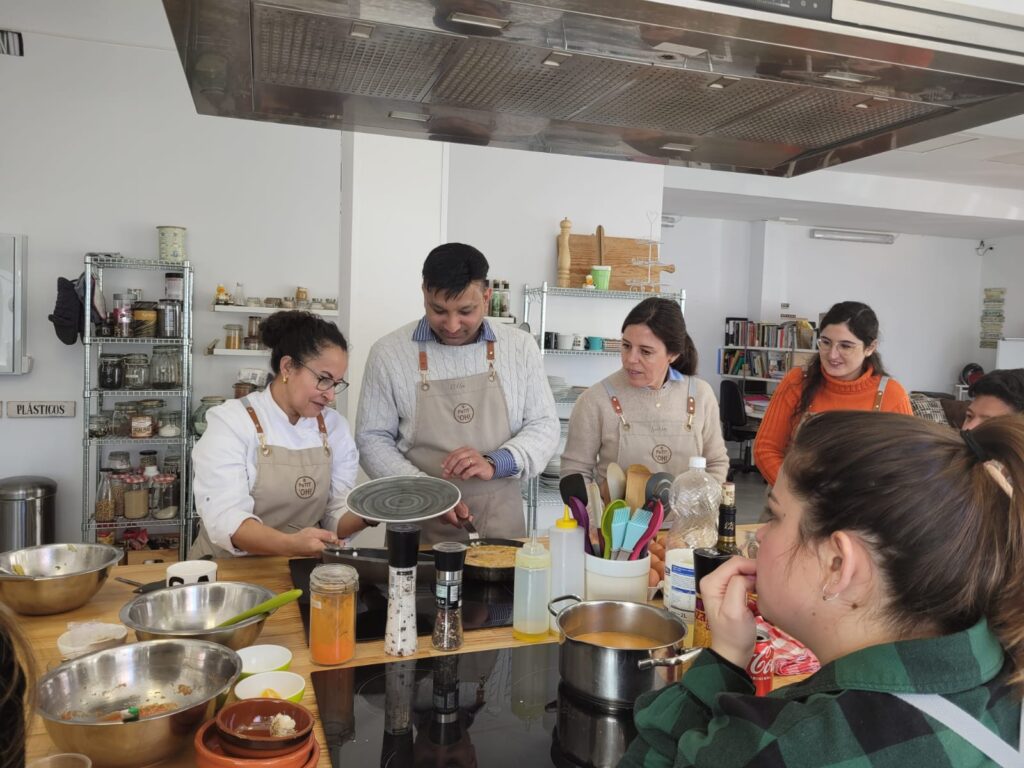
Many learners answer questions too briefly. I saw this often in speaking classes. Someone would ask, “Do you like movies?” and the reply would only be “Yes.” The conversation ended immediately. The learner knew the vocabulary, but not how to continue naturally.
Research from Canadian Journal for New Scholars in Education (CJNSE) shows
“Small talk… originally [called] ‘phatic communion’… was defined as ‘a type of speech in which ties of union are created by mere exchanges of words’. Small talk functions as a mechanism for maintaining social cohesion… opening and maintaining interaction, maintaining harmonious social relations, and expressing empathy.” – Canadian Journal for New Scholars in Education (CJNSE)
One method helped many students expand their answers without feeling overwhelmed. Instead of giving one short response, they learned to add a reason, an example, and a question back to the other person. Conversations became smoother after enough practice.
A simple pattern looks like this:
- Opinion: “I like watching movies.”
- Reason: “They help me relax after work.”
- Example: “I watched an action movie yesterday.”
- Follow-up question: “What about you?”
Small follow-up questions also help conversations continue:
- “Really?”
- “Why?”
- “How often?”
- “What happened next?”
Most real conversations are simple. People ask questions, react, and share small experiences. Repeating that pattern regularly helps learners speak more naturally over time.
Why grammar study alone won’t make you fluent
I spent years studying grammar before I felt comfortable speaking English naturally. I could finish worksheets and understand written lessons, but real conversations still felt difficult. When someone spoke quickly, I needed too much time to think before answering. Many learners experience the same problem.
Grammar still matters because it helps people speak clearly. The problem comes when learners study grammar without enough listening and speaking practice. Language becomes easier through repeated use, not only through memorization. Speaking requires quick reactions, and that skill develops slowly with practice.
Many learners struggle with these problems:
- Strong reading skills
- Slow speaking responses
- Long pauses during conversations
- Fear of making mistakes
Many students slowly improve after overcoming fear of speaking English. It’s through repeated daily conversations instead of waiting for perfect grammar before speaking.
These habits usually help more:
- Daily speaking practice
- Listening to short conversations
- Repeating simple dialogues
- Speaking aloud while alone
- Practicing with other learners
I often remind students that fluency grows through repetition. Waiting for perfect grammar before speaking usually creates more fear and hesitation. Most learners improve after many imperfect conversations, not before them. Small daily practice matters more than occasional long study sessions.
What are the best practice methods for everyday English speaking?

Some of the strongest English speakers I met were not studying for hours every day. They built simple habits and practiced consistently. I remember one learner who practiced speaking while cooking dinner each evening. Another recorded short voice notes during walks to work. Small routines often created steady progress over time.
Many beginners feel overwhelmed because they think speaking practice must be difficult or formal. In reality, short daily practice usually works better. Learners often make steadier progress after establishing a daily English study routine that includes short speaking and listening exercises connected to real situations.
These methods helped many students:
- Record short self-conversations
Talk about your day for a few minutes and listen again later. - Practice quick question-and-answer drills
Repeat common questions until answers feel automatic. - Join speaking groups
Regular conversations reduce fear over time. - Focus on one topic daily
Practice food one day and travel the next. - Shadow short audio clips
Repeat sentences immediately after hearing them.
I learned that confidence grows slowly through repetition. Learners often feel discouraged at first because progress seems small. Then one day, simple conversations suddenly feel easier. That change usually comes from steady daily exposure rather than perfect study methods.
How should conversation topics change from A1 to B1?
Over the years, I noticed some learners stayed too long with beginner topics. They became comfortable introducing themselves but struggled when conversations became less predictable. Growth usually happens when learners slowly move into longer answers, opinions, and short stories.
At the A1 level, learners mostly need survival English. They practice greetings, food, family, and simple routines. Those topics build the foundation for basic communication. After enough practice, learners become ready for more detailed conversations.
| Level | Main Topics | Goal |
| A1 | Family, food, weather | Basic survival English |
| A2 | Shopping, travel, hobbies | Longer conversations |
| B1 | Opinions, work, technology | More natural interaction |
Learners usually know they are improving when conversations feel less rehearsed. They begin asking follow-up questions naturally. They can explain short experiences without stopping constantly to translate words in their heads.
I encourage students to move forward gradually. There is no need to rush into difficult topics too early. Steady progress matters more than speed. Confidence often grows when learners notice they can handle ordinary conversations without preparing answers beforehand.
Simple English speaking habits that actually build confidence
Many learners think confidence comes first, but I rarely saw that happen in real life. Confidence usually appeared after many small conversations, not before them. I remember learners apologizing constantly for mistakes during their first weeks of speaking practice. Months later, those same learners spoke more calmly because the situations felt familiar.
Small daily habits often create the biggest improvement. Long study sessions can help, but consistency matters more. Short conversations repeated regularly help learners feel less pressure over time.
These habits helped many students feel more comfortable:
- Speak English for five minutes daily
- Use short sentences first
- Repeat familiar topics often
- Accept mistakes during practice
- Listen to simple conversations regularly
Progress often appears slowly:
- Faster responses
- Less translating in your head
- Better listening comprehension
- More comfort during small talk
I learned that learners become more relaxed when they stop chasing perfection. Real conversations are rarely perfect, even for native speakers. Speaking confidence grows through patience, repetition, and experience. Most people improve quietly over time without noticing every small step forward.
FAQ
How can I improve with basic English conversation practice at home?
Basic English conversation practice becomes easier when you use English during normal daily activities. I improved by describing my daily routine in English, answering simple questions to practice English, and repeating everyday English phrases out loud.
Short practice sessions worked better for me than long study hours. English speaking practice at home slowly helped me feel calmer and more confident during real conversations with other people.
What are good beginner English small talk topics for shy learners?
Beginner English small talk usually starts with safe and familiar subjects. Many shy learners feel more comfortable talking about hobbies in English, discussing weekend plans, or answering easy English questions and answers about food, weather, or movies.
I noticed that simple English conversation starters reduced pressure during conversations. Small talk for ESL learners becomes easier when topics feel familiar, personal, and easy to discuss naturally.
Why do everyday English dialogues improve speaking confidence?
Everyday English dialogues improve confidence because they prepare learners for real situations instead of only grammar exercises. I practiced greetings and introductions in English, phone call conversations in English, and simple shopping conversations in English until my responses became more natural.
Daily life English conversation practice also improved my listening speed. Over time, common English conversation examples helped me answer questions faster without translating every sentence first.
Which simple English speaking topics help with work and travel?
Simple English speaking topics related to work and travel are useful because they appear often in daily life. I spent time practicing simple work conversations in English, asking for directions in English, and travel conversation topics in English before meetings and trips.
Restaurant conversation in English and simple hotel conversation in English also helped me feel more prepared when speaking with strangers in unfamiliar places.
How can beginners practice English listening and speaking together?
English listening and speaking practice works best when learners practice both skills together every day. I used slow and easy English conversation videos, repeated short answers out loud, and practiced simple English role play dialogues with friends.
English conversation practice with subtitles also helped me notice pronunciation and sentence patterns more clearly. Over time, everyday questions native speakers use became easier for me to understand and answer naturally.
Real Fluency Starts With Everyday Conversations
I still remember how uncomfortable simple English conversations once felt for me. Over time, I realized fluency grows through repeated daily conversations, not perfect speaking. Small topics matter because they become part of real life communication.
We encourage learners to practice simple conversations consistently and without fear of mistakes. Confidence builds slowly through repetition, patience, and regular speaking. Every short conversation helps language feel more natural over time. Keep building fluency with us at Ivy Languages International.
References
- https://www.themuse.com/advice/5-lines-that-will-keep-a-conversation-going
- https://journalhosting.ucalgary.ca/index.php/cjnse/article/view/79833/57885
Related Articles
- https://ivylanguagesinternational.com/english-for-beginners-starter-strategies/
- https://ivylanguagesinternational.com/overcoming-fear-of-speaking-english/
- https://ivylanguagesinternational.com/establishing-a-daily-english-study-routine/